




At the age of 6, Douglass was separated from his grandparents and moved to the Wye House plantation, where Aaron Anthony worked as overseer and Edward Lloyd was his unofficial master. After Anthony died in 1826, Douglass was given to Lucretia Auld, wife of Thomas Auld, who sent him to serve Thomas’s brother Hugh Auld and his wife Sophia Auld in Baltimore. From the day he arrived, Sophia saw to it that Douglass was properly fed and clothed, and that he slept in a bed with sheets and a blanket. Douglass described her as a kind and tender-hearted woman, who treated him “as she supposed one human being ought to treat another.” Douglass felt that he was lucky to be in the city, where he said enslaved people were almost freemen, compared to those on plantations.
When Douglass was about 12, Sophia Auld began teaching him the alphabet. Hugh Auld disapproved of the tutoring, feeling that literacy would encourage enslaved people to desire freedom. Douglass later referred to this as the “first decidedly antislavery lecture” he had ever heard. “‘Very well, thought I,'” wrote Douglass. “‘Knowledge unfits a child to be a slave.’ I instinctively assented to the proposition, and from that moment I understood the direct pathway from slavery to freedom.”
Under her husband’s influence, Sophia came to believe that education and slavery were incompatible and one day snatched a newspaper away from Douglass. She stopped teaching him altogether and hid all potential reading materials, including her Bible, from him. In his autobiography, Douglass related how he learned to read from white children in the neighborhood and by observing the writings of the men with whom he worked.
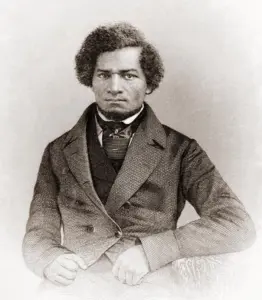

Douglass continued, secretly, to teach himself to read and write. He later often said, “knowledge is the pathway from slavery to freedom.” As Douglass began to read newspapers, pamphlets, political materials, and books of every description, this new realm of thought led him to question and condemn the institution of slavery. In later years, Douglass credited The Columbian Orator, an anthology that he discovered at about age 12, with clarifying and defining his views on freedom and human rights. First published in 1797, the book is a classroom reader, containing essays, speeches, and dialogues, to assist students in learning reading and grammar. He later learned that his mother had also been literate, about which he would later declare:
I am quite willing, and even happy, to attribute any love of letters I possess, and for which I have got—despite of prejudices—only too much credit, not to my admitted Anglo-Saxon paternity, but to the native genius of my sable, unprotected, and uncultivated mother—a woman, who belonged to a race whose mental endowments it is, at present, fashionable to hold in disparagement and contempt.
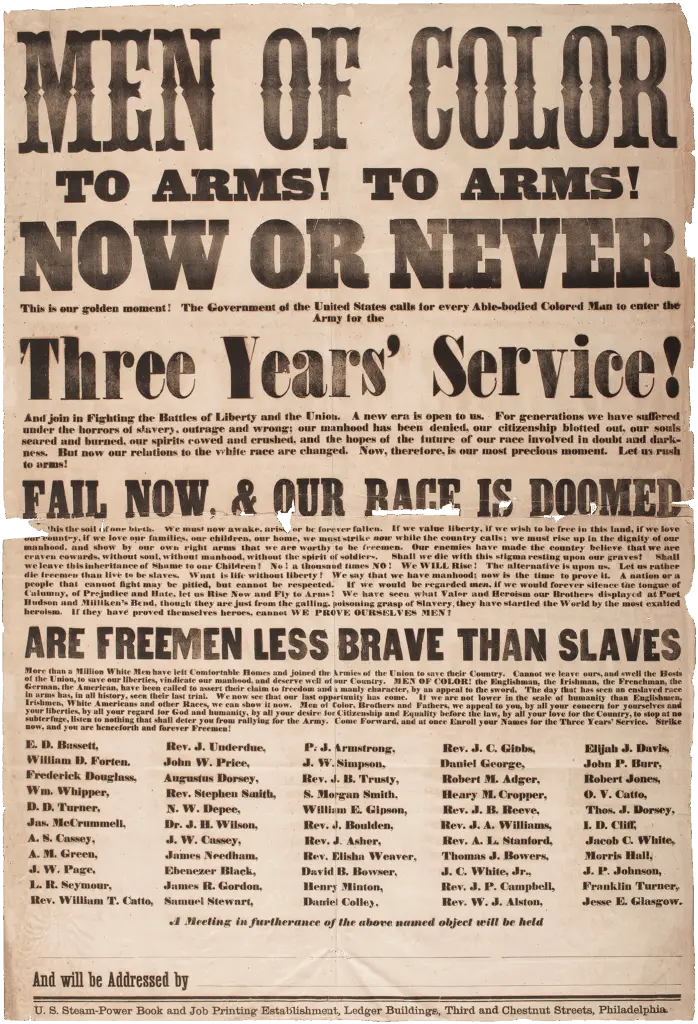

Douglass and the abolitionists argued that because the aim of the Civil War was to end slavery, African Americans should be allowed to engage in the fight for their freedom. Douglass publicized this view in his newspapers and several speeches. After Lincoln had finally allowed black soldiers to serve in the Union army, Douglass helped the recruitment efforts, publishing his famous broadside Men of Color to Arms! on March 21, 1863. His eldest son, Charles Douglass, joined the 54th Massachusetts Infantry Regiment, but was ill for much of his service. Lewis Douglass fought at the Battle of Fort Wagner. Another son, Frederick Douglass Jr., also served as a recruiter.
With the North no longer obliged to return slaves to their owners in the South, Douglass fought for equality for his people. Douglass conferred with President Abraham Lincoln in 1863 on the treatment of black soldiers and in 1864 on “how to mobilize the southern slaves of the Confederate states so that they could contribute to the war effort”.

President Lincoln’s Emancipation Proclamation, which took effect on January 1, 1863, declared the freedom of all slaves in Confederate-held territory. (Slaves in Union-held areas were not covered because the proclamation was deemed permissible under the Constitution only as a war measure; they were freed with the adoption of the 13th Amendment on December 6, 1865.) Douglass described the spirit of those awaiting the proclamation: “We were waiting and listening as for a bolt from the sky … we were watching … by the dim light of the stars for the dawn of a new day … we were longing for the answer to the agonizing prayers of centuries.”
During the U.S. Presidential Election of 1864, Douglass supported John C. Frémont, who was the candidate of the abolitionist Radical Democratic Party. Douglass was disappointed that President Lincoln did not publicly endorse suffrage for black freedmen. Douglass believed that since African American men were fighting for the Union, they deserved the right to vote.
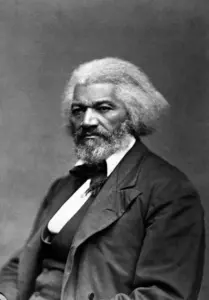
After escaping from slavery in Maryland in 1838, Douglass became a national leader of the abolitionist movement in Massachusetts and New York and gained fame for his oratory and incisive antislavery writings. Accordingly, he was described by abolitionists in his time as a living counterexample to claims by supporters of slavery that enslaved people lacked the intellectual capacity to function as independent American citizens. Northerners at the time found it hard to believe that such a great orator had once been enslaved. It was in response to this disbelief that Douglass wrote his first autobiography.
Douglass wrote three autobiographies, describing his experiences as an enslaved person in his Narrative of the Life of Frederick Douglass, an American Slave (1845), which became a bestseller and was influential in promoting the cause of abolition, as was his second book, My Bondage and My Freedom (1855). Following the Civil War, Douglass was an active campaigner for the rights of freed slaves and wrote his last autobiography, Life and Times of Frederick Douglass. First published in 1881 and revised in 1892, three years before his death, the book covers his life up to those dates. Douglass also actively supported women’s suffrage, and he held several public offices. Without his knowledge or consent, Douglass became the first African American nominated for vice president of the United States, as the running mate of Victoria Woodhull on the Equal Rights Party ticket.
Douglass believed in making alliances across racial and ideological divides, as well as in the anti-slavery interpretation of the U.S. Constitution, after he had broken with William Lloyd Garrison. When radical abolitionists, under the motto “No Union with Slaveholders”, criticized Douglass’s willingness to engage in dialogue with slave owners, he replied: “I would unite with anybody to do right and with nobody to do wrong.”
In 1835 Hugh Auld hired Douglass out to William Gardiner to be a ship caulker in his shipyard in Fell’s Point, Baltimore. He suffered abuse by white workers who feared competition from slave labor.
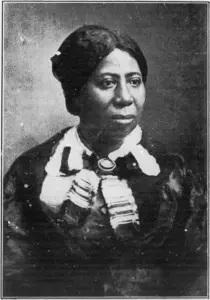

Douglass first tried to escape from Freeland, who had hired him from his owner, but was unsuccessful. In 1837, Douglass met and fell in love with Anna Murray, a free black woman in Baltimore about five years his senior. Her free status strengthened his belief in the possibility of gaining his own freedom. Murray encouraged him and supported his efforts by aid and money.
On September 3, 1838, Douglass successfully escaped by boarding a northbound train of the Philadelphia, Wilmington and Baltimore Railroad in Baltimore. The area where he boarded was formerly thought to be a short distance east of the train depot, in a recently developed neighborhood between the modern neighborhoods of Harbor East and Little Italy. This depot was at President and Fleet Streets, east of “The Basin” of the Baltimore harbor, on the northwest branch of the Patapsco River. Research cited in 2021, however, suggests that Douglass in fact boarded the train at the Canton Depot of the Philadelphia, Wilmington, and Baltimore Railroad on Boston Street, in the Canton neighborhood of Baltimore, further east.