




When people think of the Civil Rights Movement, the names most often mentioned are those who marched, protested, and stood at the front of public demonstrations. Yet behind many of those leaders was a thinker who helped shape their moral compass. Dr. Benjamin Elijah Mays was one of the most influential educators and theologians of the 20th century—and the man Dr. Martin Luther King Jr. called his “spiritual and intellectual father.”
Mays believed deeply that education, faith, and moral courage were inseparable. His life’s work helped define what leadership could look like for Black Americans navigating injustice while remaining grounded in dignity, discipline, and hope.
Benjamin E. Mays was born in 1894 in Ninety Six, South Carolina, to parents who had been formerly enslaved. His childhood was marked by both poverty and trauma, including witnessing racial violence that left a permanent impression on him. These early experiences shaped his belief that racism was not only a social problem but a moral one.
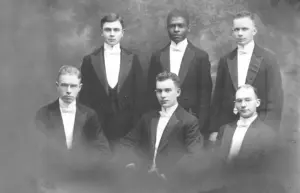
Despite limited resources, Mays excelled academically. He earned his undergraduate degree from Bates College in Maine, then went on to earn a master’s degree from the University of Chicago and a Ph.D. from the University of Chicago Divinity School. At a time when higher education was often closed to African Americans, Mays pushed forward, believing education was essential for liberation.

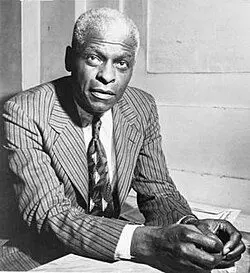
Mays was not only an academic but a deeply committed Christian theologian. His scholarship explored the intersection of Christianity, race, and ethics. Unlike many religious leaders of his era, Mays openly criticized the American church for its complicity in segregation and injustice.
He traveled extensively, studying how Christianity was practiced across the globe, particularly in Africa and Asia. These experiences helped him see racism as a global moral failure, not just an American one. His global perspective made his teachings both prophetic and practical.
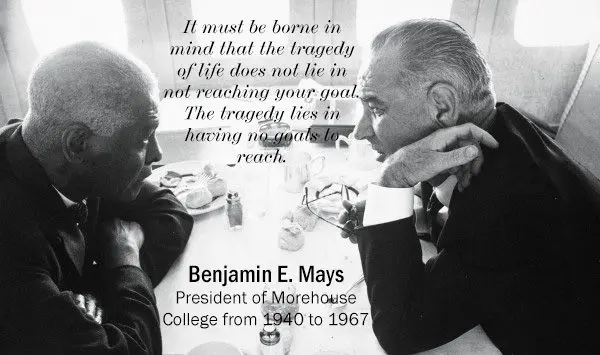
In 1940, Benjamin E. Mays became president of Morehouse College, a position he would hold for 27 years. Under his leadership, Morehouse evolved into one of the nation’s premier institutions for developing Black male leadership.
Mays raised academic standards, strengthened faculty credentials, and emphasized character development alongside scholarship. He believed students should be trained not merely to succeed personally, but to serve society ethically.
One of his most significant contributions was mentoring students—none more notable than a young Martin Luther King Jr. Mays’ weekly chapel speeches profoundly influenced King’s understanding of justice, nonviolence, and the moral responsibility of leadership.
Although Mays was not often on the front lines of protests, his ideas were embedded in the movement itself. He helped frame civil rights as a moral imperative rooted in Christian ethics, not simply a political struggle.
His teachings emphasized:
These principles shaped an entire generation of leaders who went on to change American history.
Thanks for Listening to WCHB AM - (WMUZ Radio, Inc)! Please register to continue listening. Thank you!